Community
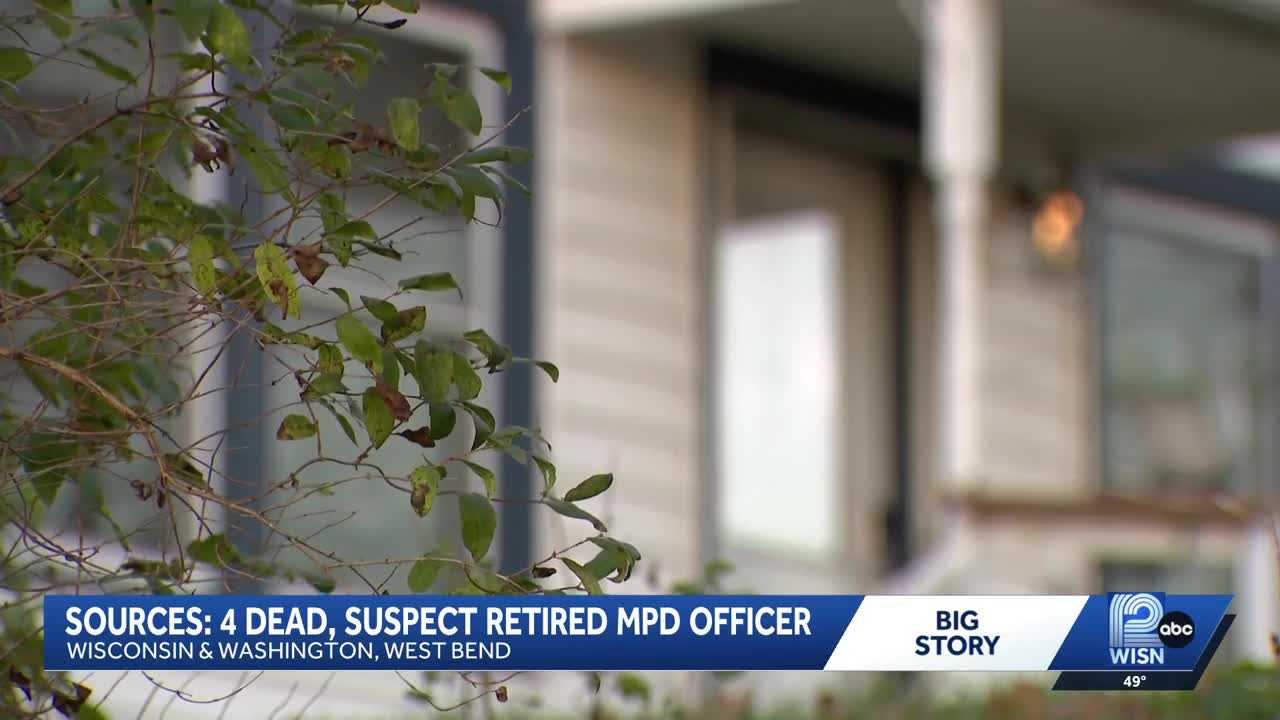
4 dead, including 2 kids, found dead in West Bend home
By Marcus Chen
Advertisement · Why this ad?
Marcus manages the day-to-day editorial workflow across all brands, coordinating coverage assignments and ensuring editorial standards are met. He previously served as city editor at the Pioneer Press and holds a degree in Political Science from Carleton College.
More from Marcus →
John Rambo became an American action icon only after the culture surrounding him discarded the warning embedded in his original story. In “First Blood,” released in 1982, he was not a fantasy of uncomplicated military power. He was a former Green Beret wandering through a country that celebrated the idea of the warrior, while remaining unprepared to confront what war had done to those who survived it. Rambo arrived in the Pacific Northwest searching for a member of his former unit and learned that the man had died from cancer. With the rest of the unit already gone, Rambo was left without the community that had connected his military past to civilian life. A local police chief treated his isolation as suspicious and forced him out of town. When Rambo returned, officers arrested, stripped, and abused him. Their treatment triggered memories of torture in Vietnam, turning an ordinary jail into an extension of the battlefield. The violence that followed at the hands of law enforcement was therefore rooted in trauma, humiliation, and institutional failure. Rambo’s combat abilities allowed him to overpower the authorities hunting him, but the film did not present those abilities as proof that war had perfected him. They showed how thoroughly war had damaged his capacity to exist anywhere else. His survival skills protected him while also trapping him inside the violent conditions that had produced them. The film appeared as the United States was beginning to recognize combat trauma as a lasting psychological injury rather than a temporary failure of discipline. Post-traumatic stress disorder became a formal diagnosis in 1980, shaped partly by research and advocacy involving Vietnam veterans. Congress established community-based Vet Centers in 1979 after recognizing that many veterans continued to experience serious readjustment problems and were not consistently using existing government services. That history complicated the popular image of Vietnam veterans as either neglected heroes or permanently unstable men. Most eventually rebuilt civilian lives, but a substantial minority experienced chronic psychological distress, employment difficulties, family disruption, and social isolation. The problem was not simply that veterans carried war home. American institutions had devoted enormous resources to preparing them for combat without creating an equally comprehensive system for their return. Rambo’s personal dislocation also reflected a larger national wound. The fall of Saigon on April 30, 1975, ended the war with images that contradicted decades of American claims about strategic control, moral authority, and inevitable victory. The United States had emerged from World War II with a political identity built around exceptional power. Vietnam exposed the limits of that identity and left the country divided over whether the war had been immoral, unwinnable, mismanaged, or abandoned. The resulting uncertainty became known as the Vietnam syndrome: a broad reluctance to support new military interventions after the casualties, government deception, and domestic turmoil associated with the war. For political leaders who wanted to restore American military confidence, that caution could be portrayed as weakness rather than public judgment. “First Blood” held the veteran’s trauma and the nation’s defeat inside the same story. Rambo was powerful but not restored, dangerous but not triumphant. The film offered no fantasy that greater violence could repair either the man or the country. That restraint would not survive the franchise’s evolution. That transformation arrived most clearly with “Rambo: First Blood Part II,” released in 1985. The sequel moved Rambo out of the American town that had rejected him and sent him back to Southeast Asia on a mission built around U.S. prisoners of war and soldiers missing in action. The plot turned Vietnam from a concluded defeat into an unfinished betrayal. Rambo’s suffering no longer primarily exposed what war and neglect had done to him. It became evidence that the country had failed to unleash, support, and honor its warriors. The damaged veteran was recast as the one man still capable of proving that the war’s shame belonged not to American force itself, but to the officials, bureaucrats, and political restraints that had prevented victory. That shift gave popular form to a larger Reagan-era rejection of the Vietnam syndrome. The caution that followed Vietnam had grown from casualties, official deception, domestic protest, and the visible limits of U.S. power. In the sequel, that caution became the enemy. Rambo’s mission was obstructed less by enemy soldiers than by a system unwilling to let him complete the rescue it had assigned him. The first film treated violence as the tragic language of a man who could not escape war. The second treated violence as the only honest answer to national paralysis. Within that reversal, military force became cleansing rather than contaminating. The question was no longer how a country should care for those it sent to war, but how a country could recover its honor by allowing them to fight without restraint. The emotional structure of the later Rambo films depended on grievance. Vietnam was reframed less as a failed war than as a betrayal of soldiers who had been denied the support needed to win. The veteran’s pain became a way to absolve the nation while redirecting blame toward civilians, officials, protest movements, and weak institutions. That story had deep appeal because it offered vindication without requiring a full reckoning with the war’s political choices or human costs. In that version of memory, the central wound was no longer only the abandonment of veterans after Vietnam. It was the belief that American power had been denied the chance to prove itself. By “Rambo III,” released in 1988, the character’s transformation had moved beyond Vietnam revisionism into late Cold War mythology. Set against the Soviet-Afghan War, the film placed Rambo inside a global struggle where U.S.-aligned violence appeared as liberation. The man who had first embodied war’s inability to end became an instrument of moral certainty. His isolation, once a sign of social failure, became part of his usefulness. He needed no real community, no institutional repair, and no sustained confrontation with trauma. He needed only a battlefield where his damage could be converted into purpose. That is why the franchise’s political afterlife matters. “First Blood” presented Rambo as a warning about what happens when a nation trains men for war and then leaves them to survive its aftermath alone. The following Reagan-era sequels preserved the wound but changed its meaning. Trauma became grievance. Grievance became entitlement to force. Force became the imagined cure for defeat. In that ideological progression, the culture did not simply turn Rambo into an action hero. It stripped away the most disturbing part of his original story. The warrior and combat veteran that America wanted to celebrate had been made unable to live in the civilian world by the wars and institutions that claimed him. The figure that endured was not the damaged man, but the weaponized survivor. Byline © Visual Noria Doyle Art by Isaac Trevik • created using generative AI and digital editing
By Marcus Chen

By Marcus Chen

By Marcus Chen

By Katherine Langford